Skip to Main Content
Discover Uni Life

Taster Workshops for School Classes
Bastelmaterialien auf Holztisch: Spaghetti, Kleber, Marshmallows und bunte Werkstoffe – Workshop an der Universität Liechtenstein

Would you like to get a taste of university life with your school class? Our workshops offer pupils practical insights into architecture and business, either on campus or directly in your classroom.

Through interactive formats, students can experience what studying is like, talk to current students and discover what a degree programme at the University of Liechtenstein looks like. There is no pressure to perform, only authentic university atmosphere.
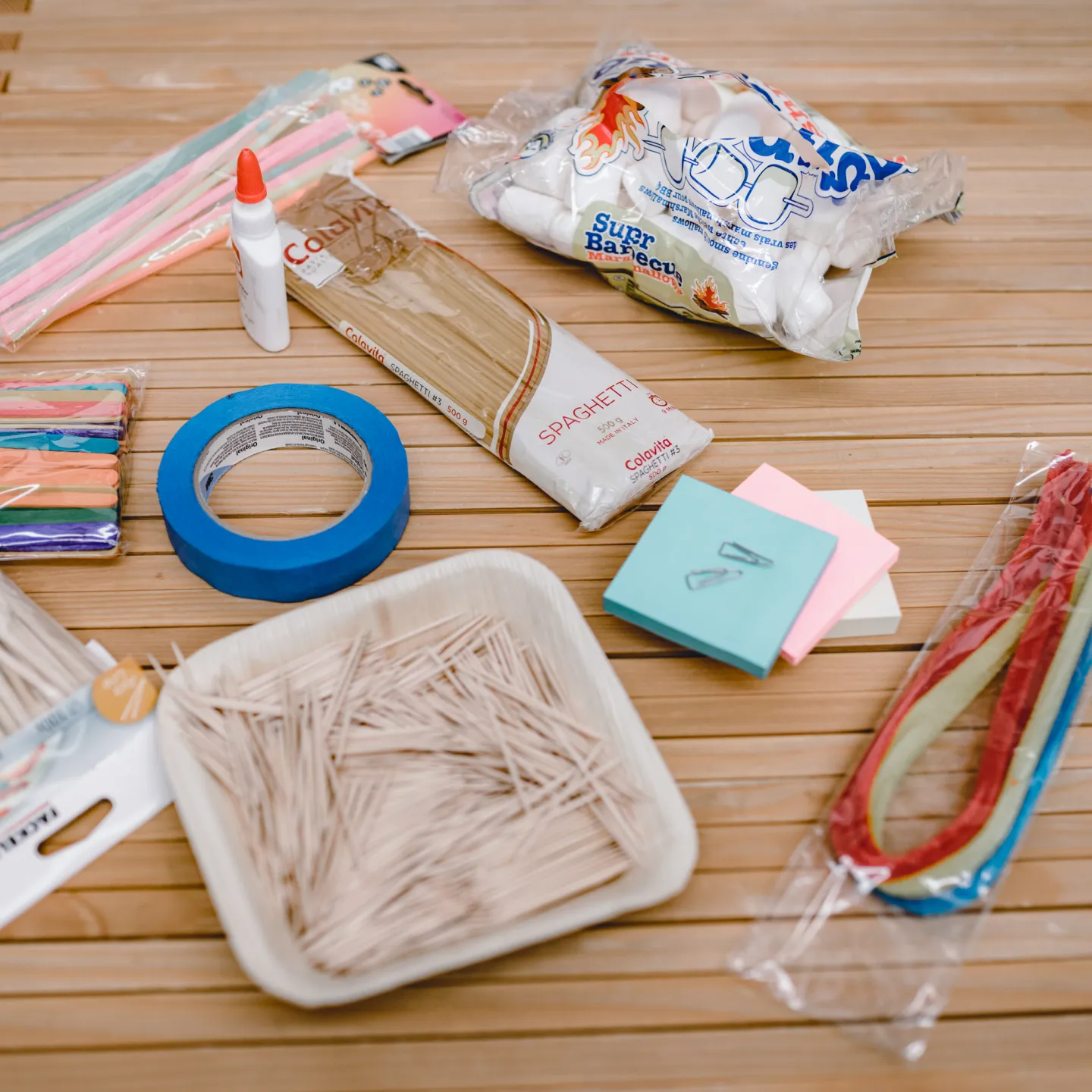
Bastelmaterialien auf Holztisch: Spaghetti, Kleber, Marshmallows und bunte Werkstoffe – Workshop an der Universität Liechtenstein

What to Expect


  • Inspiring workshops and short presentations
  • Insights into the degree programmes in Architecture and Business Administration
  • Exchange with current students
  • Guided campus tours
  • A relaxed atmosphere with snacks and drinks


Flexible and uncomplicated
 

Visit us with your class at the University of Liechtenstein, or let us bring the university experience directly to your classroom.

For more clarity on your path to choosing a degree programme.

Current Workshop Offers

Architecture

Who can build the tallest skyscraper? Who will construct the bridge with the longest span?
This hands-on activity is designed to explore which factors influence both the stability and the aesthetic quality of structures.

Steel and spaghetti share similar physical properties. That is why spaghetti can be used to create structural models comparable to steel constructions.


Instructions

Students work individually or in teams to create their own spaghetti structures.
They can choose to build a skyscraper, a bridge or a free-form structure.
In doing so, they engage with concepts such as span length, load-bearing capacity and stiffness in steel constructions. Geometric principles and repetitive modular systems may also come into play.


Workshop Structure

Step 1: Introduction – Structures and Industrialisation
An introduction to the history of bridge or skyscraper construction provides the foundation for the workshop. This is also a story of industrialisation and thus of steel engineering. The introduction may take the form of a guided discussion, short video or expert talk.

Step 2: Experiment and Build
Based on the chosen theme, students decide whether to build a skyscraper, a bridge or a free-form structure. Using spaghetti, glue and optional mini marshmallow beads, they explore structural design through trial and error.
Teachers or facilitators should support the process by offering guidance on trusses, diagonals and joint connections. Modular systems may be introduced, encouraging repetition and pattern-based construction.

Step 3: Stability Testing
At the end of the workshop, the different constructions are presented and discussed.
Height, span length, cantilever or load-bearing capacity are tested and compared.
This part of the activity may also take the form of a competition, with a winning team, motivating participants to create bold and innovative structures.

This workshop aims to introduce young people to the topic of upcycling in architecture as well as in everyday life. Participants learn to sharpen their awareness of designed spaces and to develop creative ideas further.

In addition to raising awareness for architecture, the workshop also encourages a deeper reflection on the topic of waste. What kind of waste do we produce every day? What materials could be reused or repurposed? And how can design and architecture emerge from waste?


Instructions

Working in groups of four to six, students come up with ideas, design and build architectural objects such as a chair, table or lounger – using discarded materials. These materials are collected in the weeks leading up to the workshop or sourced elsewhere. The focus is not only on materials and design, but also on the users of the objects.

Workshop Structure

Step 1: Analysing Seating Furniture and Sitting Positions
A chair is not just a chair. In the first part of the workshop, students get to know and analyse various types of seating furniture. The aim is to understand how such furniture is used and which dimensions are required. A person’s sitting position on a dining chair is very different from that on a deckchair. Students measure their own bodies and sketch out different seating types in groups. Each group then selects a seating design and a material. Everything is sketched and dimensioned in advance.

Step 2: Understanding and Reusing Materials
Once the material is selected, students start building and testing individual components. The stability and sturdiness of the entire piece of furniture provides insights into possible adjustments in construction. This process allows students to explore and apply the specific properties of different materials in new ways. The concepts of recycling and upcycling may also be introduced and discussed.

Step 3: Reflection and Presentation
In the final phase, students are invited to present their seating objects. They are encouraged not only to showcase the final product, but also to explain the process that led to its creation. Based on sketches, drawings and working models, an exhibition is curated that presents their engagement with recyclable materials – and can be shared with invited guests such as parents and friends.

Designers and architects often draw inspiration from nature. This connection can lead to new and innovative ideas in entirely unexpected ways. In this workshop, vegetables and fruit serve as inspiration for architecture and spatial design.

The workshop focuses on developing creativity, innovation and spatial imagination. It is designed to stimulate students’ creativity and encourage playful exploration.

Instructions:
The workshop is based on a variety of fruits and vegetables. When choosing materials, it is important to select items that allow for complex and spatial interpretation. At the beginning of the session, examples from architecture and product design inspired by nature can be shown to set the tone.

Workshop Structure:
Step 1: Selecting and Preparing Materials
With a single precise cut, participants divide their chosen fruit or vegetable into two halves. They observe and examine the internal structure, especially the hollow spaces and chambers inside the object. The unused parts can later be used to prepare a fruit salad, vegetable sticks or a mixed salad as a break-time or end-of-session treat.

Step 2: Drawing the Section
In the next step, students draw a two-dimensional section of one of the halves on a sheet of paper. The drawing should be approximately 30 by 30 centimetres in size. If students prefer to start with a smaller version, they can enlarge their drawing by photocopying it afterwards.

Step 3: Creating Spatial Models
The drawing or its copy forms the basis for constructing three-dimensional structures using paper. In this creative stage, students freely develop new spatial forms. The only rule is that the shape of the drawing serves as the ground plan for the new space. Using paper strips, they can build imaginative and complex spatial enclosures. The resulting models may be presented in a small exhibition and discussed as a group.

Business Administration

Confident use of digital tools, particularly AI, is becoming a key skill for creatively and efficiently translating real-world challenges into digital solutions. In this workshop, pupils learn in a practical way how they can use AI-based tools to transform problems from everyday life, school, society or the economy into innovative application ideas. Starting with specific challenges, participants develop digital solutions and explore the role AI can play in this process. Working in small groups, pupils will design digital innovations (e.g. a podcast or an online game) using selected AI tools. The aim is to understand AI as a creative and methodological tool that can be used to develop well-thought-out digital solutions based on real-world needs. In this workshop, we’ll get a taste of a topic that our students spend an entire semester exploring.

This interactive workshop offers pupils an exciting introduction to the world of artificial intelligence (AI). Participants learn how AI works, where it is used in everyday life, and explore the ethical challenges posed by this technology. They also have the opportunity to apply AI models to practical problems. The workshop provides hands-on knowledge and sparks an interest in one of the most important fields of the future.

Online shops are experiencing high growth rates across all sectors. This raises the question of why they are so successful and what factors drive consumers to pay even higher prices online than they would in a traditional retail shop. An introduction to the topic of IT-supported sales (e-commerce), with particular emphasis on the specific characteristics of this sales channel. Based on the characteristics of digital products, selected phenomena of e-commerce (network effects, lock-in effects) are presented and their implications analysed.

The workshop focuses on the individual characteristics that distinguish successful entrepreneurs. Pupils will learn about key traits such as self-efficacy, creativity, perseverance, opportunity recognition and mindfulness, and understand why these are crucial for entrepreneurial thinking and action. Through practical examples, interactive exercises and reflection, the workshop demonstrates how these skills can be developed and applied in everyday life. The aim is to raise awareness that entrepreneurial success depends not only on ideas, but above all on inner attitudes and skills that can be actively developed.

What makes a good leader? How do you build a successful team, and how important are communication and collaboration? In this interactive workshop, participants experience leadership in a playful way using LEGO. Through creative building tasks and exciting team challenges, pupils explore leadership, teamwork and management. In the process, they learn how effective communication works, how conflicts can be resolved and what it takes to succeed together. Along the way, they gain their first-hand experience of what it’s like to be a leader.

Technology is becoming an ever-greater part of our everyday lives. Innovations such as the Internet of Things (IoT) and artificial intelligence (AI) form the technological basis for new products and services. This workshop will explore the fundamental concepts underlying innovation, as well as the related concepts of change and digital transformation.

How do creative ideas come about, and how does an idea become a good solution? In this interactive workshop, pupils will learn the basics of design thinking and put them into practice straight away. Through creative tasks, collaborative tinkering and building with simple materials, they will develop, test and refine their own ideas. The aim is not to find the perfect solution straight away, but to explore new approaches, learn from mistakes and develop creative solutions together. In this way, pupils will experience how innovation comes about and why teamwork, communication and a change of perspective play such an important role in the process.

Gebäude Bundesgymnasium Bludenz Österreich
"Once again, a heartfelt thank you on behalf of my entire class. It was a wonderful experience – truly interesting, or in the words of the students, 'a really cool workshop.' Many, many thanks!"
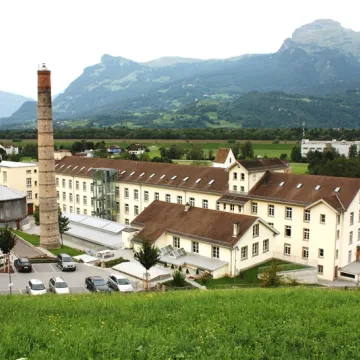
Bundesgymnasium Bludenz
Gebäude Schule Formatio Liechtenstein
First of all, thank you so much for the fantastic workshop, the doughnuts and for organising the speakers! At our open day next Friday, we will be able to show prospective students exactly which experts we had the pleasure of working with."
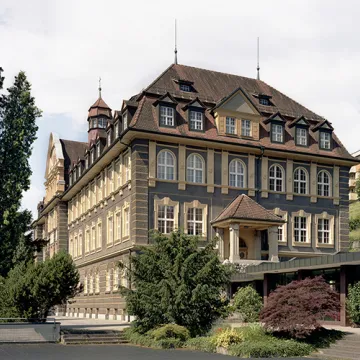
Formatio Liechtenstein
HLW Feldkirch
On behalf of both classes, we would like to sincerely thank you once again for the excellent organisation and the exciting morning. The students thoroughly enjoyed the presentation, the campus tour, the conversations – and of course the doughnuts 😊 – and the feedback was overwhelmingly positive."
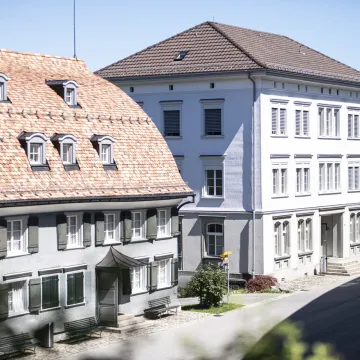
HLW Feldkirch
Kantonsschule Trogen
Once again, many thanks for Monday’s workshop at the Cantonal School in Trogen. It was very well received by the students."
Kantonsschule Trogen

Additional Offers

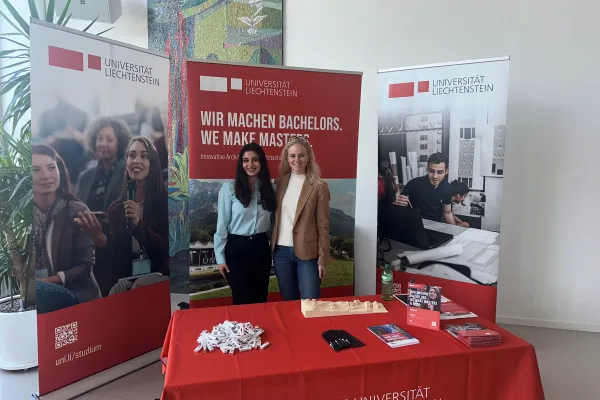
Two women on fair stand
School Fairs

Are you organising an education fair at your school? We would be happy to take part and advise your students on possible pathways after graduation.

Just send us an email.
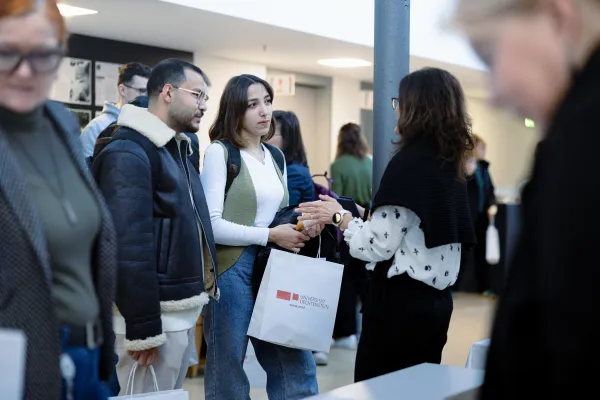
Busy Hallway at the University of Liechtenstein with Many Students During a Reception with Refreshments
Excursion for Your Teaching Staff

Would you and your colleagues like to get to know the University of Liechtenstein in person?

We are happy to organise a guided campus tour and present our educational opportunities to you in detail.

School Alumni

University Students Supporting School Students

What is it really like to study at the University of Liechtenstein?
Students from the Bachelor’s programmes in Architecture and Business Administration share their personal experiences and give you an authentic look into student life.

Got questions?
Feel free to contact directly out Student Ambassadors.


On request, our School Alumni also visit schools and speak directly to classes about their path to the University of Liechtenstein, daily student life, and their personal insights.

If you're interested or have questions, get in touch with: friederike.metzler@uni.li.
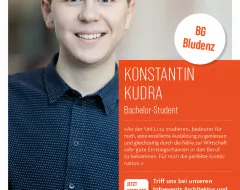
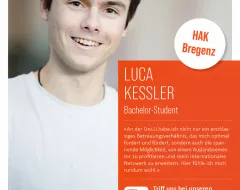
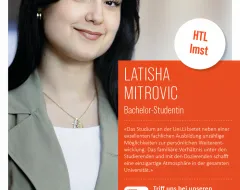
A Selection of Our School Alumni

Still Have Questions?

Contact us

Ass. iur. Friederike Metzler-Koll
Project Manager - Communications and Marketing
Employee