When spaces become overwhelming
When spaces become overwhelming
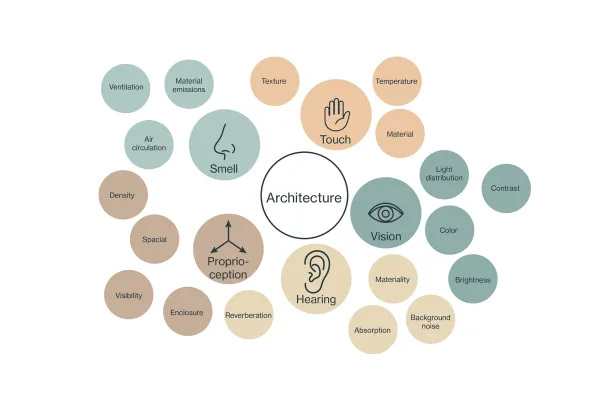
In her research, architecture student Carola Mayerhoffer examines how sensory stimuli interact within spaces and can generate strain. Based on this, she develops approaches for a more inclusive architecture.
Neuroarchitecture explores how built environments influence perception, stress regulation, attention, and behaviour. This interdisciplinary field connects architecture, neuroscience, and environmental psychology, asking how different sensory stimuli affect cognitive and emotional processes.
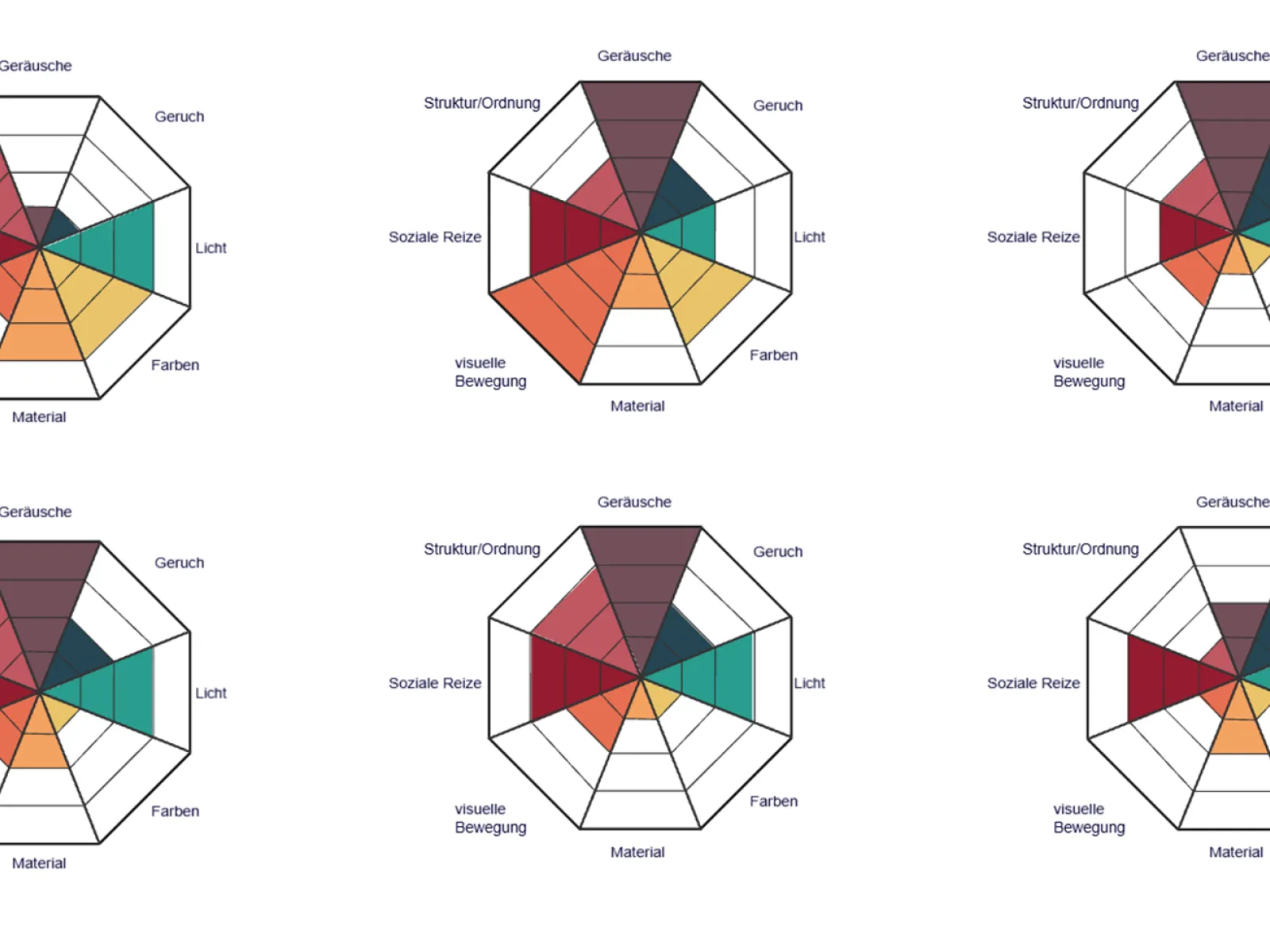
Particularly in the context of neurodiversity, this perspective is becoming increasingly important, as spatial quality can no longer be designed for a «typical average user». Sensory profiles illustrate how differently perceptual preferences, stress thresholds, and spatial needs can be expressed. They make visible that sensory strain does not arise equally for all user groups.
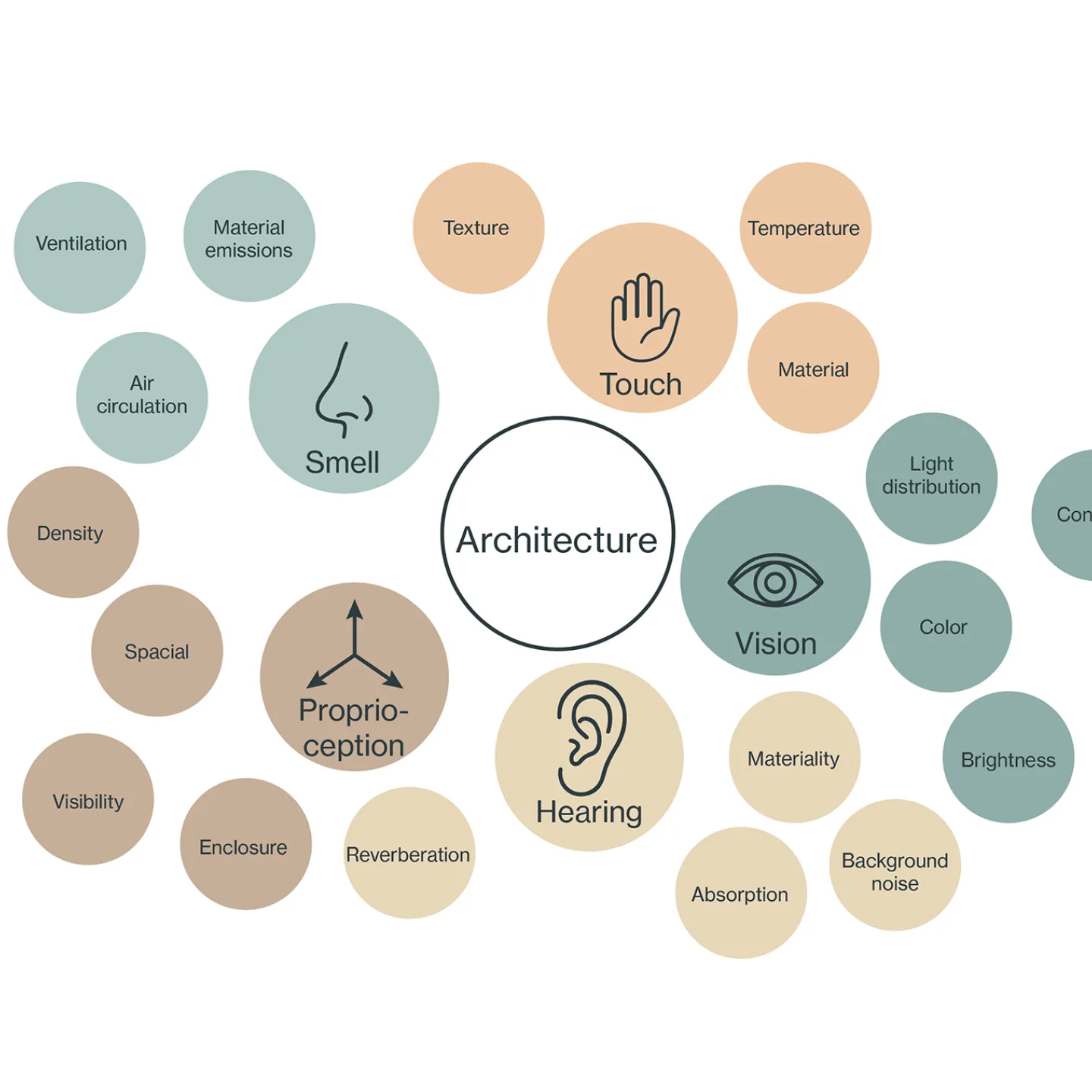
Many contemporary office environments still follow neurotypical standards such as visual openness, constant social exposure, diffuse background noise, and uniform lighting. For neurodivergent individuals, these conditions can lead to persistent overload, reduced concentration, or withdrawal from everyday work life.
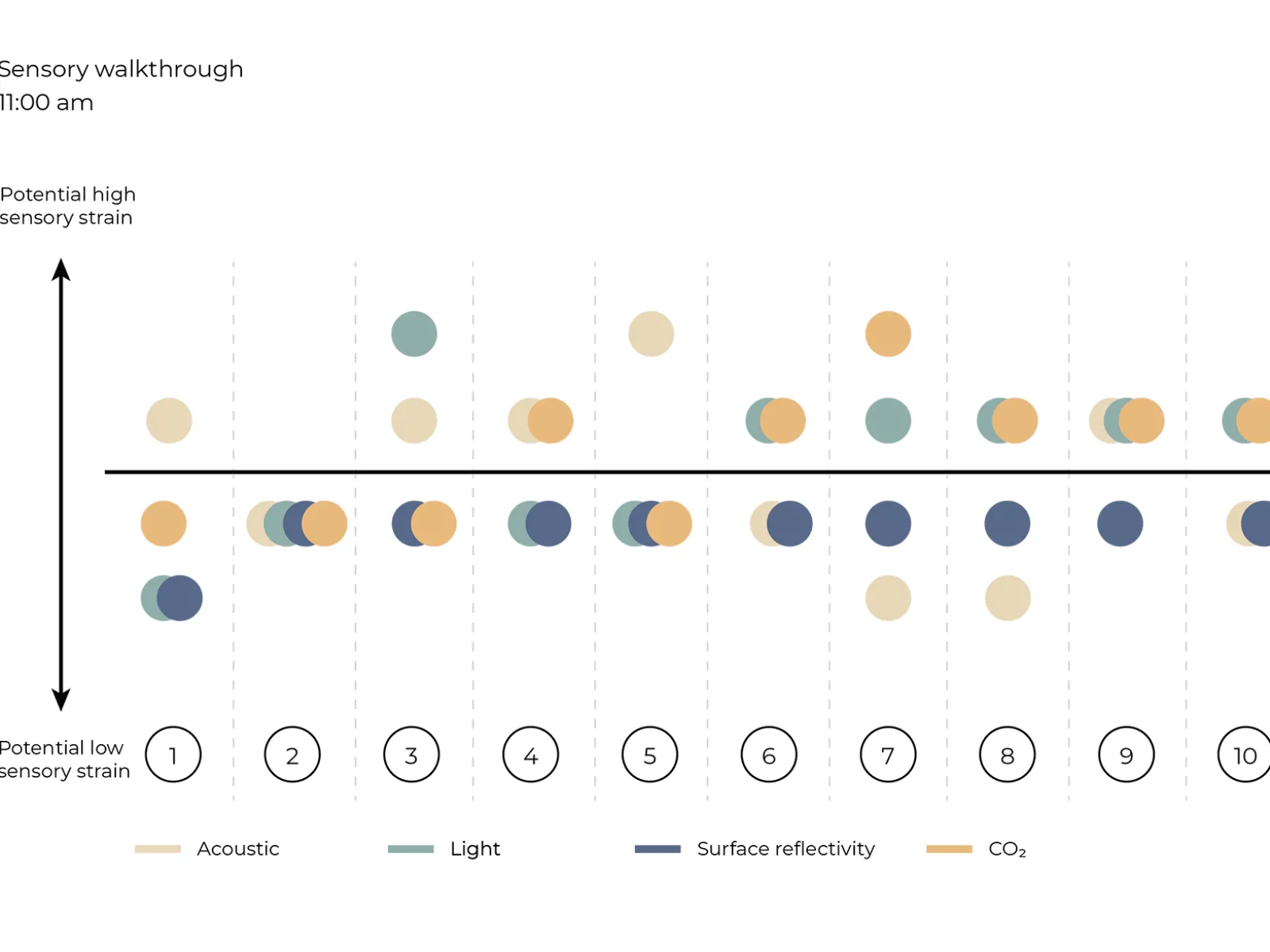
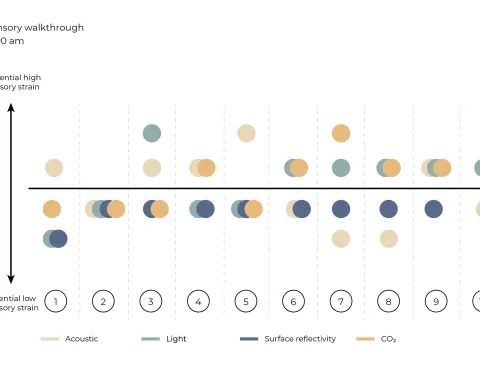
I investigate this tension through a case study in an existing office environment. On site, sound, light, surface reflection, temperature, and air quality were measured. Complemented by a sensory walkthrough, potential zones of strain along real movement paths were identified. The measurement tools used enabled an objective assessment of environmental spatial factors.
The subsequent evaluation of the measurement series shows the levels of individual environmental factors along the route. It becomes clear that even several low values, when considered individually, do not necessarily result in an overall low level of sensory strain. What remains decisive is the situational interaction of different stimuli and their perception within a specific spatial context. For design practice, this implies a shift in perspective: the focus is no longer on the isolated optimisation of individual environmental values, but on the spatial organisation of their relationships. The separation of focus and circulation zones, multisensory retreat spaces, and alternative routing can help make buildings more sensorily robust.
These measures benefit not only neurodivergent user groups. Neurotypical individuals are also sensitive to constant noise, visual clutter, and a lack of retreat options. The findings are therefore relevant not only for office environments but also for schools, retail spaces, and other public buildings where orientation, stimulus regulation, and social exposure play a central role. Neuroinclusion is thus not a special solution, but an architectural necessity for rethinking spatial quality under conditions of diverse human perception.


About the author
Carola Mayerhoffer is a fourth-semester Master’s student in Architecture at the University of Liechtenstein. The project is part of the research semester within the Sustainable Design Unit, under the supervision of Prof. Dietrich Schwarz and David Kloeg.