Italy - Venice
Italy - Venice
Understanding the Italian Language
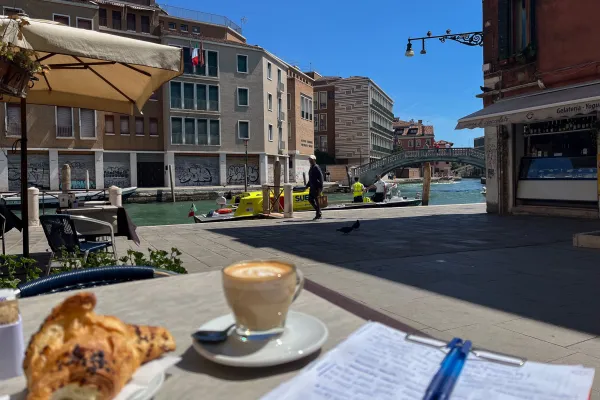
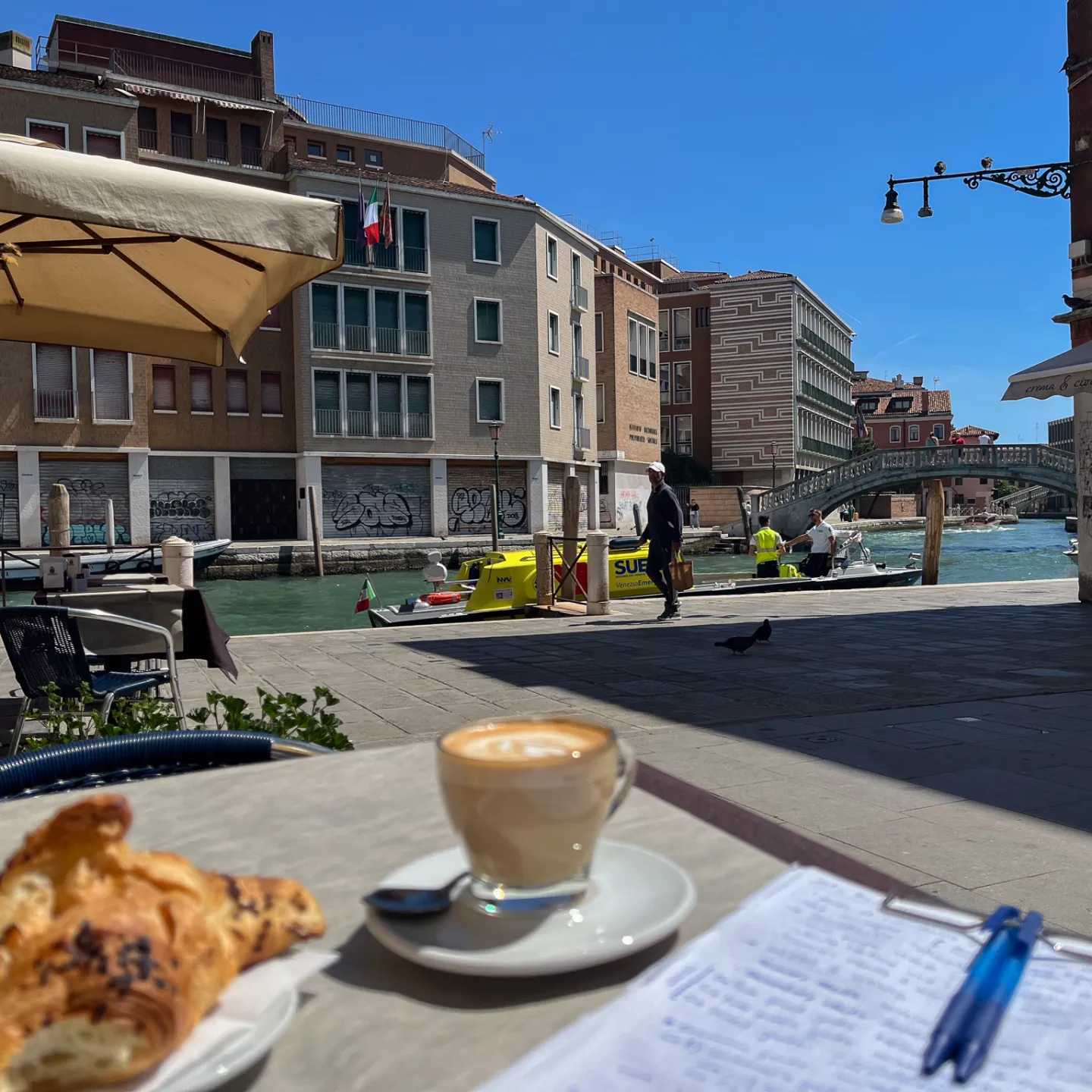
When I arrived in Italy, I expected the language barrier to be one of the biggest challenges of my Erasmus experience. Very quickly, however, I realized that it was much smaller than I had imagined.
In the academic environment, speaking English was never really a problem. Because of the large number of Erasmus students at IUAV, English automatically became the common language among students and also in conversations with professors. Even students from different countries who were not native English speakers communicated comfortably in English, which created a very open atmosphere. I noticed that people cared much more about understanding each other than about speaking perfectly. Communication became especially important during the design studio projects, where we worked in groups of five with students from completely different nationalities and backgrounds.
At work, I was in an even more fortunate situation. My boss had previously spent time in Germany during his own Erasmus experience, so from time to time I was even able to speak German with him. Apart from a few older employees, most people in the office also spoke enough English for everyday communication. Because of this, I never truly felt isolated because of the language. Still, conversations between colleagues naturally switched back to Italian whenever they spoke among themselves. At first, this felt slightly strange because I could barely follow what was happening around me. Over time, however, I realized that this became one of the greatest learning opportunities during my stay abroad. In the beginning, I could only understand very short and simple sentences. Yet through context, gestures, facial expressions, and tone of voice, I often understood far more than I expected. My colleagues were very considerate at first and frequently translated conversations or jokes into English so I would not feel excluded. After around two months, however, they gradually stopped translating everything and instead told me that by then I should understand enough Italian to follow the context myself, or at least understand the punchline of a joke. Surprisingly, they were often right. And if not, I simply asked for the translation.
Another environment in which I was able to improve my Italian was the Sunday mass in Venice. Out of consideration for international visitors, the entire text of the mass was printed and handed out in different languages. This allowed me to follow the Italian service while simultaneously comparing it to the translated version, almost like subtitles. It turned out to be an effective exercise for improving both listening comprehension and pronunciation.
A real language barrier only became noticeable once I left Venice to explore the small and authentic villages of the Veneto region with a rented car. During these trips, I often found myself in local restaurants or cafés where nobody spoke English. Communication suddenly became much more improvisational, sometimes through translation on the phone, sometimes through gestures, and sometimes simply by pointing at pictures on menus.
Without really noticing it, I slowly began understanding more and more Italian in everyday situations. Even though my own speaking skills remained limited, my listening comprehension improved significantly. I started recognizing common expressions and understanding parts of discussions around me. What made this especially rewarding was that it happened almost unconsciously through daily life rather than through formal studying. One of the most valuable lessons I learned during my Erasmus experience was that the best way to learn something new is often to be thrown into unfamiliar situations. At first, this can feel uncomfortable, but over time the discomfort slowly turns into confidence. I became more comfortable asking questions, improvising with the vocabulary I had, and finding creative ways to communicate when words were missing.