My Semester Abroad at BAS
My Semester Abroad at BAS
Everything you need to know about the fantastic atmosphere in Bergen
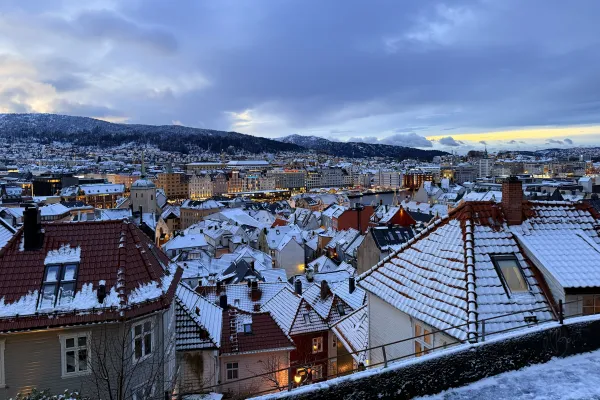
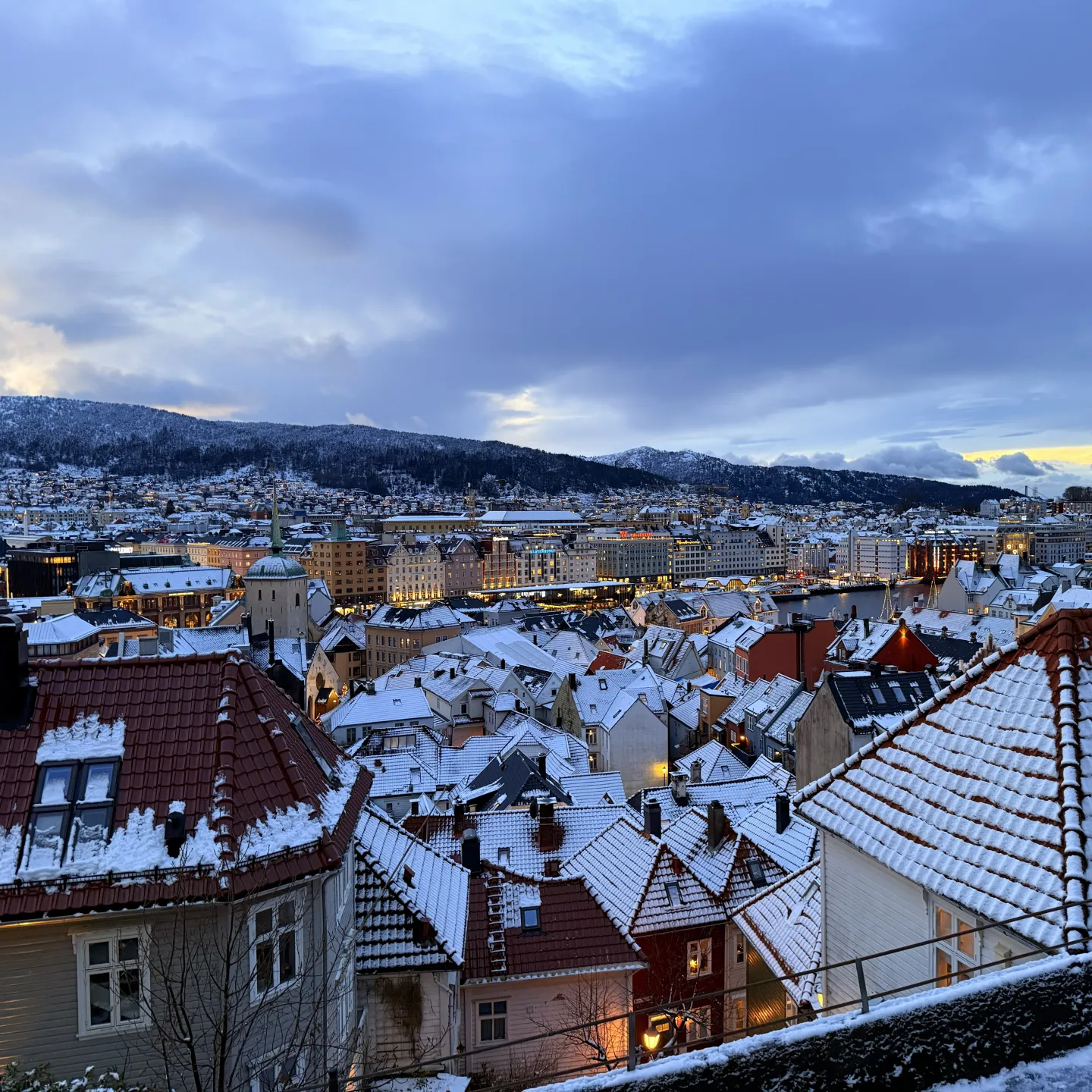
As my semester at the Bergen Architecture School (BAS) comes to an end, I realise how much my perception of the ‘unknown’ has evolved. What initially seemed strange and unfamiliar, and even unsettling at times, has gradually become a familiar and natural part of my everyday life.
This development is particularly evident in the BAS institution itself, its teaching practices, and the people and social structures within it. From day one, it was evident that BAS operates differently from the universities I am familiar with. Rather than traditional introductory sessions, we were immediately immersed in collaborative and creative working methods. Each person was asked to bring an object – not just any item, but one that represented their attitude or a question they had and that they would give to the group. This task initially felt unfamiliar and allowed for a great deal of interpretation. Yet it was precisely this that opened the gateway to a new way of thinking: one that was less rigid, more open, and more process-oriented.
The first round of introductions also turned out differently from what we had expected. We were only supposed to say our names, but by the second person, people had started adding their country of origin. This spontaneously created a more open and personal dynamic, laying the foundation for a strong sense of community within the group. What were initially unfamiliar faces gradually became the people with whom I worked every day. A key factor in this was the intensive time we spent together at university. We met daily, worked in groups, discussed projects, and developed ideas together. Our regular reading sessions on Thursday mornings at 10 am in the library were particularly formative. Not only were these meetings academically enriching, but they were also socially bonding, often accompanied by coffee and informal conversation.
New connections were also formed outside everyday university life. While having lunch with a fellow student, I got to know other students. Through this, I discovered not only new people, but also new cultural practices, such as the traditional Norwegian dish ‘fiskekaker’. I also took part in social rituals such as ‘Taco Friday’, a well-established tradition in Norway. Cooking evenings in the university kitchen, where we prepared meals for the whole year group, further strengthened our sense of community.
A defining feature of BAS is its approach to space and materials. The university does not see itself merely as a place of learning, but as an adaptable space that is actively shaped by its students. Standardised tables are absent; instead, work surfaces are made from old wooden planks or doors combined with simple trestles. Materials are reused, and the entire school essentially functions as a store of materials. Students have even carried out large-scale projects, such as constructing a pizza oven from recycled façade bricks. This openness and experimental approach to resources was unfamiliar to me at first, but it soon became an inspiring matter of course.
Of course, there were minor challenges, too, such as a lift that did not always work reliably. However, even these details became part of my everyday experience, helping to make the surroundings feel increasingly familiar.
These experiences have had a significant impact on my intercultural learning. I have learnt to embrace new situations and cope with uncertainty, developing trust in processes that are not clearly structured from the outset. At the same time, my self-perception has changed; I have realised that I can find my feet in a new environment, build new social networks, and become an active part of a community.
In hindsight, it is clear that the ‘unknown’ does not suddenly disappear, but changes gradually. With each passing day, I became more familiar with my surroundings – the people, the working methods, and the culture. This continual process of getting to know things, reflecting on them, and adapting has broadened my understanding of architecture and collaboration and has also had a lasting impact on my personal development.