Tansania - Daressalam
Tansania - Daressalam
First impressions of Tanzania
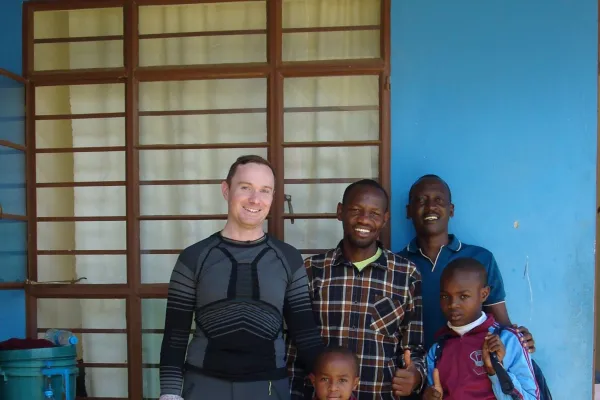
I am currently staying in Tanzania for a financial education project, funded by Erasmus+ resources. The first project week was mainly about having to—or being allowed to—find my way in a very unfamiliar environment. Many things work differently here than we are used to, starting with the fact that there are practically no supermarkets and, if there are, product prices are not displayed. So one never knows whether the price charged is the daily rate or perhaps based on friendliness or something similar. Not least, my accommodation in the Tanzanian hinterland may look unusual to some: it is actually a large tent under a shelter roofed with woven banana leaves. Sleeping so close to nature was wonderful, though of course one hears the roosters crowing every day at dawn around 5 a.m. Particularly striking, both in the Arusha region and in Dar es Salaam, is the very chaotic traffic, where even eight-lane intersections manage without traffic lights and seemingly without rules.
In my experience, Tanzania is an exceptionally hospitable country with warm, courteous, and very helpful people. Locals often approach me to offer assistance without asking for payment or appearing intrusive. However, as a socialist-autocratic state, one also observes poverty here in an almost unbearable extent, while at the same time the incredible wealth of certain individuals closely tied to the regime stands out. Quite in line with the saying popular in the former GDR: “All are equal, but some are more equal.”
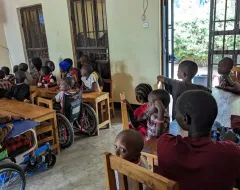
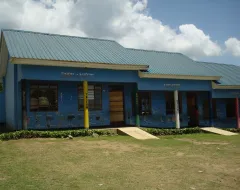
As mentioned, I spent the first days in the hinterland, in the Arusha region, which is relatively prosperous due to its proximity to Kilimanjaro and Mount Meru. In terms of financial education and cooperation with local schools, the highlight of this week was a visit to the Engilanget Pre and Primary School. This private school is among the best in the country and is run on a non-profit basis by a local, a member of the Maasai people. It has nearly 200 students across grades 1 to 6 of primary school. In addition, there is a preschool and childcare for babies, where even abandoned children sometimes find refuge. The special feature of this school, whose name translates as “Light of the World,” is its inclusive character. Physically disabled students are deliberately admitted free of charge. Principal Boniface explains the main motivation as follows: “We know that all people have their dignity given by God. Therefore, we want to break the stigma and shame often associated with the birth of a disabled child. By being a light to these families, we fulfill our purpose.”
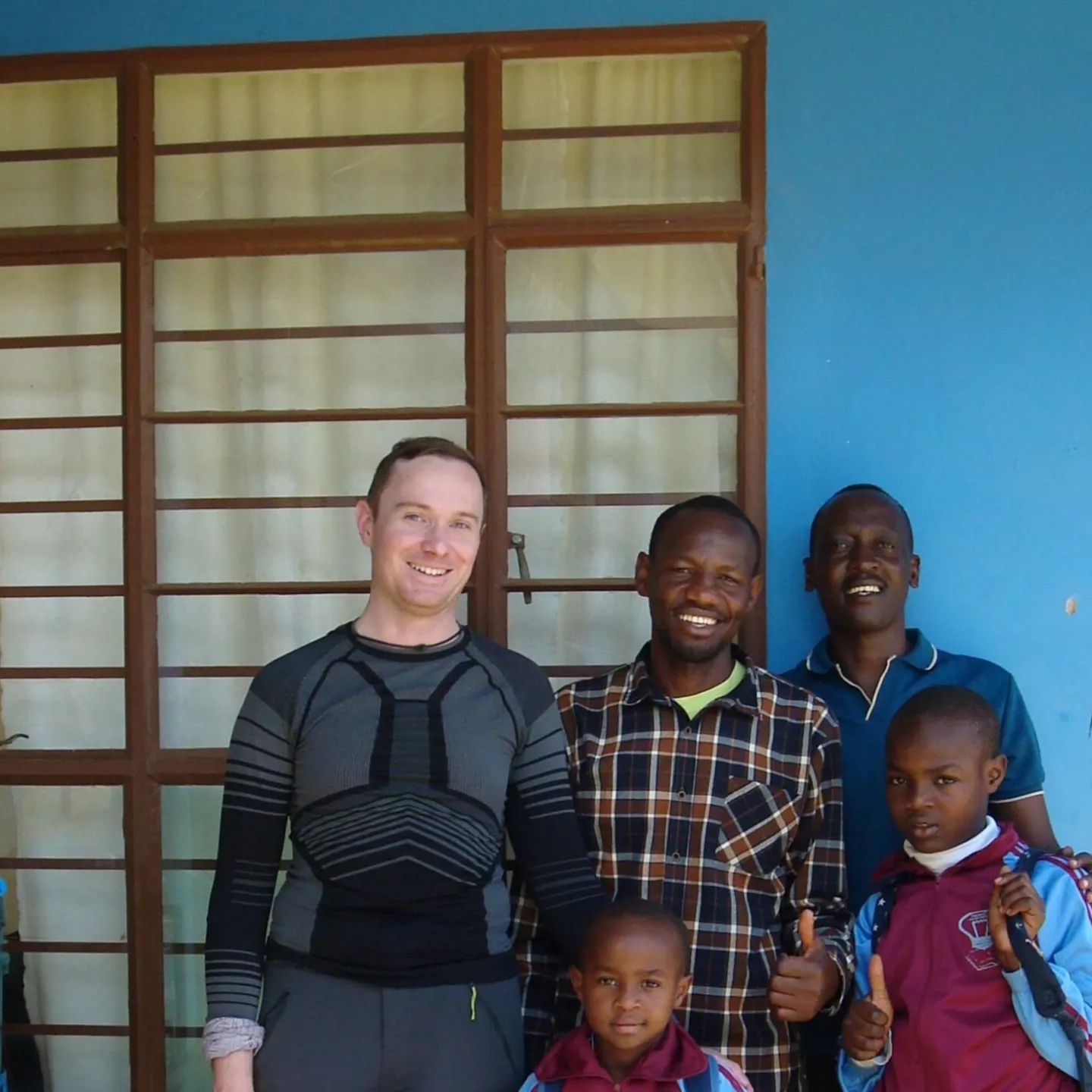
Alongside the tour, I had the opportunity to speak with the principal about the importance of understanding budgeting, saving, and interest—even in households with very small incomes. My partners and I may be able to extend our teaching to this school, thereby reaching a second region of the country. I was also able to visit my two sponsored children, whose schooling I am privileged to support financially, and who proudly introduced me to their sometimes very affectionate friends. Who knows when a European last visited them? Some classes sang me a welcome song, others even saluted; overall, it was an unusual but heartfelt spectacle! Since our visit was spontaneous and unannounced, I perceived all impressions as authentic rather than rehearsed.
One father insisted on inviting me on short notice for a weekend trip to Tanzania’s third-highest mountain, the 4,566 m Mount Meru, knowing that alpine climbing is one of the main focuses of my life. Although Meru is not difficult to climb—a visit is highly recommended and is usually made quite comfortable with mountain huts, porters, and cooks—it offered breathtaking views. In our case, we went alone, self-sufficient, and completed the 3,000 meters of elevation gain in two instead of four days. What remains especially vivid in my memory are the lush rainforest, the many exotic birds, and the wildlife: zebras, giraffes, warthogs, and buffalo. It was also beautiful to watch the sun slowly rise behind Kilimanjaro, the roof of Africa. Near the summit, we encountered a klipspringer antelope, while on the approach the day before we had already seen the rare red duiker antelope, as well as a common waterbuck antelope, which I managed to photograph in the dense bush. From time to time, monkeys also appeared, though with most species one must be cautious, as they are considered “thievish” and always hungry.
I have now arrived at the Indian Ocean in Dar es Salaam, where meetings with my project partners and workshops at our existing partner schools are scheduled.