Between Inside and Outside. Architect Christian Weyell visits the Liechtenstein School of Architecture
Between Inside and Outside. Architect Christian Weyell visits the Liechtenstein School of Architecture
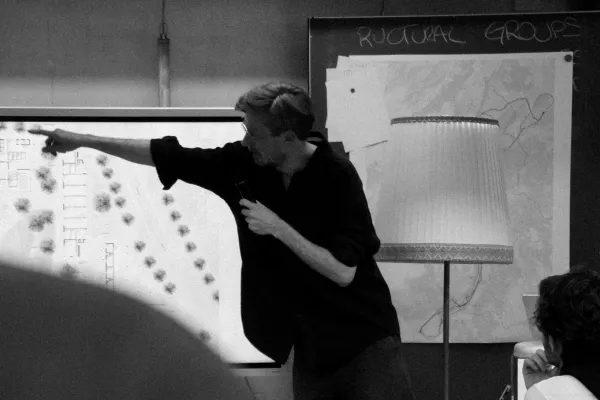
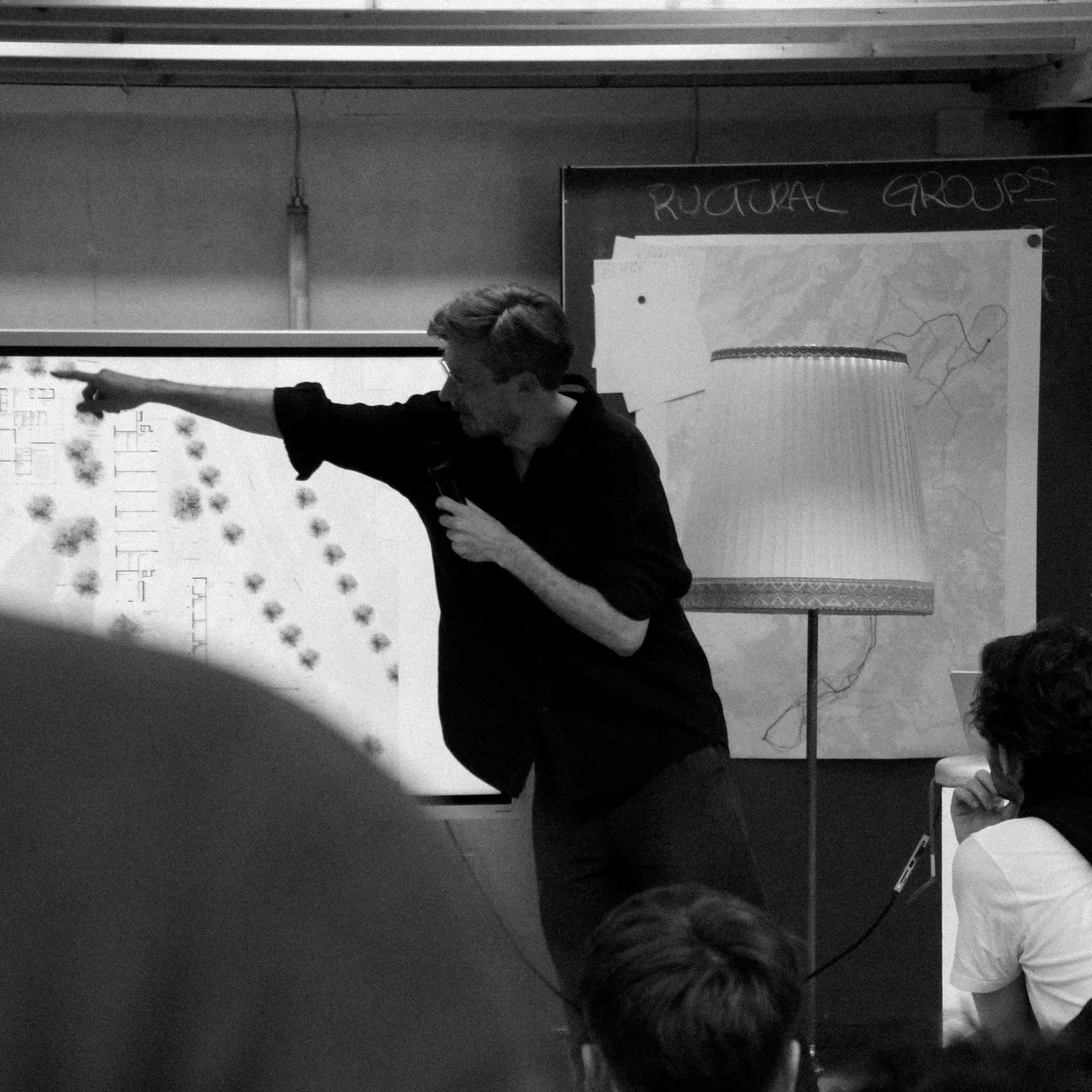
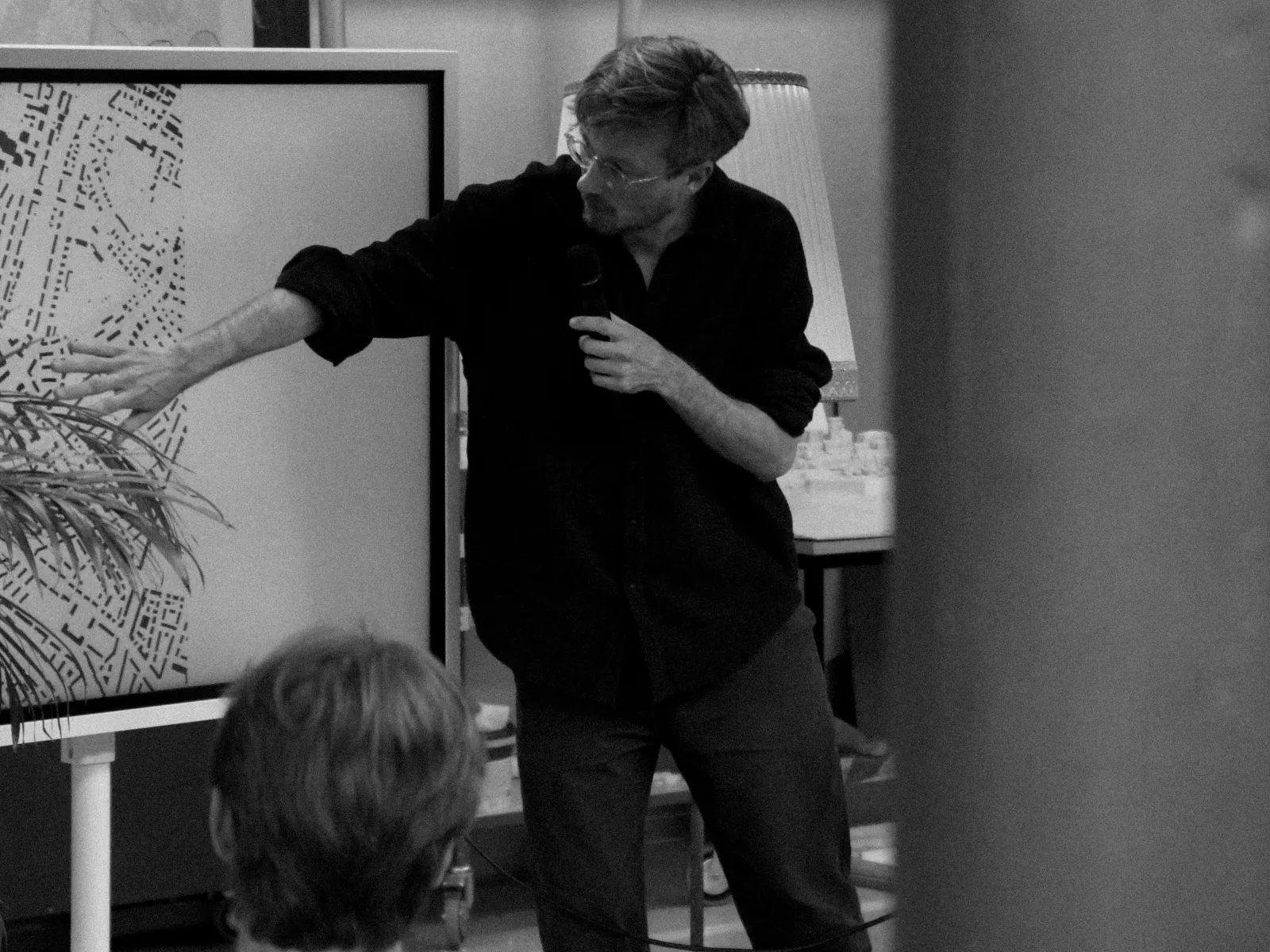
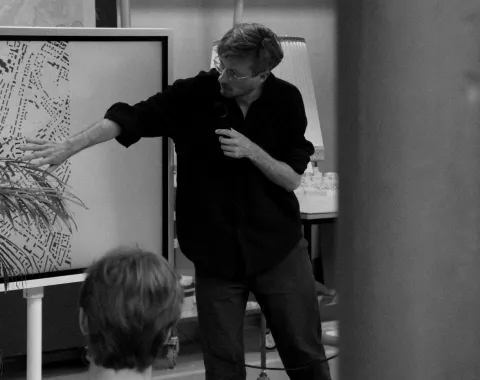
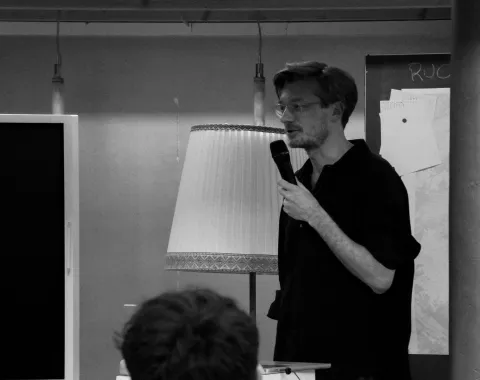
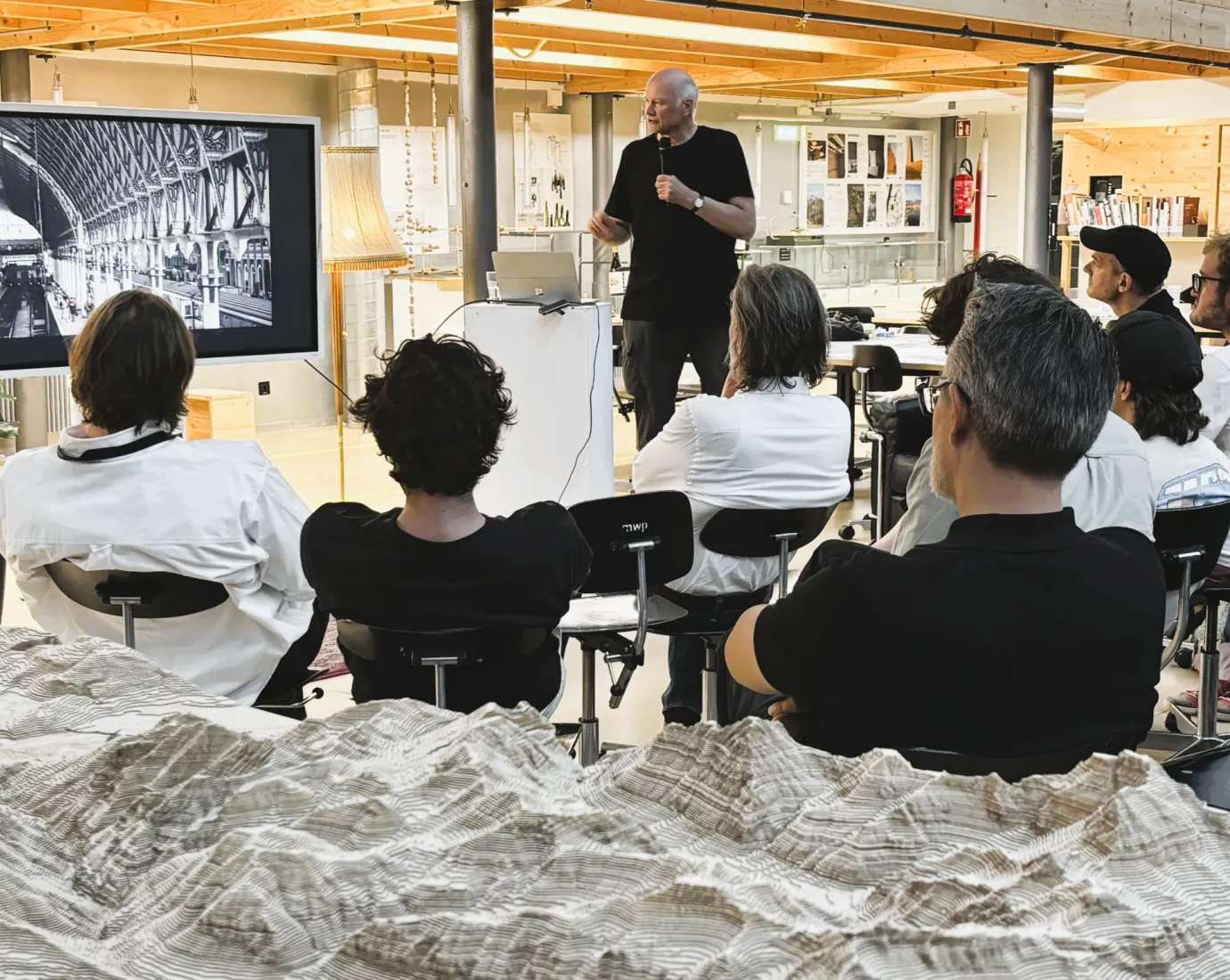
Christian Weyell from the Basel-based architecture office Weyell Zipse gave a lecture at the Liechtenstein School of Architecture on 7 May 2026, presenting the project «Schulhaus Guggach» in Zurich, which received, among other distinctions, the «Goldenen Hasen» award from Hochparterre magazine in 2024.
Through plans, photographs and film works by filmmaker Nikola Miloradovic, Christian Weyell provided insight into the design, atmosphere and use of the building. Central to the lecture was the question of how architecture can respond to climate, use and community, and how spaces can emerge that continuously change and are appropriated through everyday life.
Rather than being conceived as a closed building volume, the school is understood as a porous structure positioned between the street and the neighbourhood park. «The urban design concept was shaped by porosity, which we also wanted to continue in the architecture», Weyell explained during the lecture. In particular, the central foyer forms an intermediate spatial zone that is neither clearly inside nor outside. Depending on the season and use, the space can be opened or closed. «The building can be seen as a kind of sailboat that can adapt to changing weather conditions.»
Throughout the lecture, Christian Weyell repeatedly addressed the significance of this so-called intermediate climate zone. «The legal distinction between indoor and outdoor spaces is very clearly defined. As soon as you move somewhere in between, everyone is confused at first», he noted. At the same time, this ambiguous condition opened up entirely new spatial possibilities: «The intermediate climate zone opened up a completely new field of possibilities for us.»
The appropriation of space by its users also played a central role in the lecture. According to Weyell, the architecture was conceived in a way that requires active engagement. «The users are forced to engage with the indoor climate. You have to take care of the building in order for it to function.» Particularly striking, he observed, was how naturally the children inhabit and activate the spaces: «In the end, it is beautiful to see how the space absorbs the energy of the children.»
The building’s large sliding gates became a recurring motif throughout the lecture. «It simply makes you happy to open the large gates», Weyell said. Spaces that had initially been only loosely defined ultimately became the most important parts of the project in everyday use: «The space that was never really commissioned became the most important part of the project.»